Launch Flow

Governed agentic operations

AI-guided setup.
Deterministic execution.
Full audit trail.

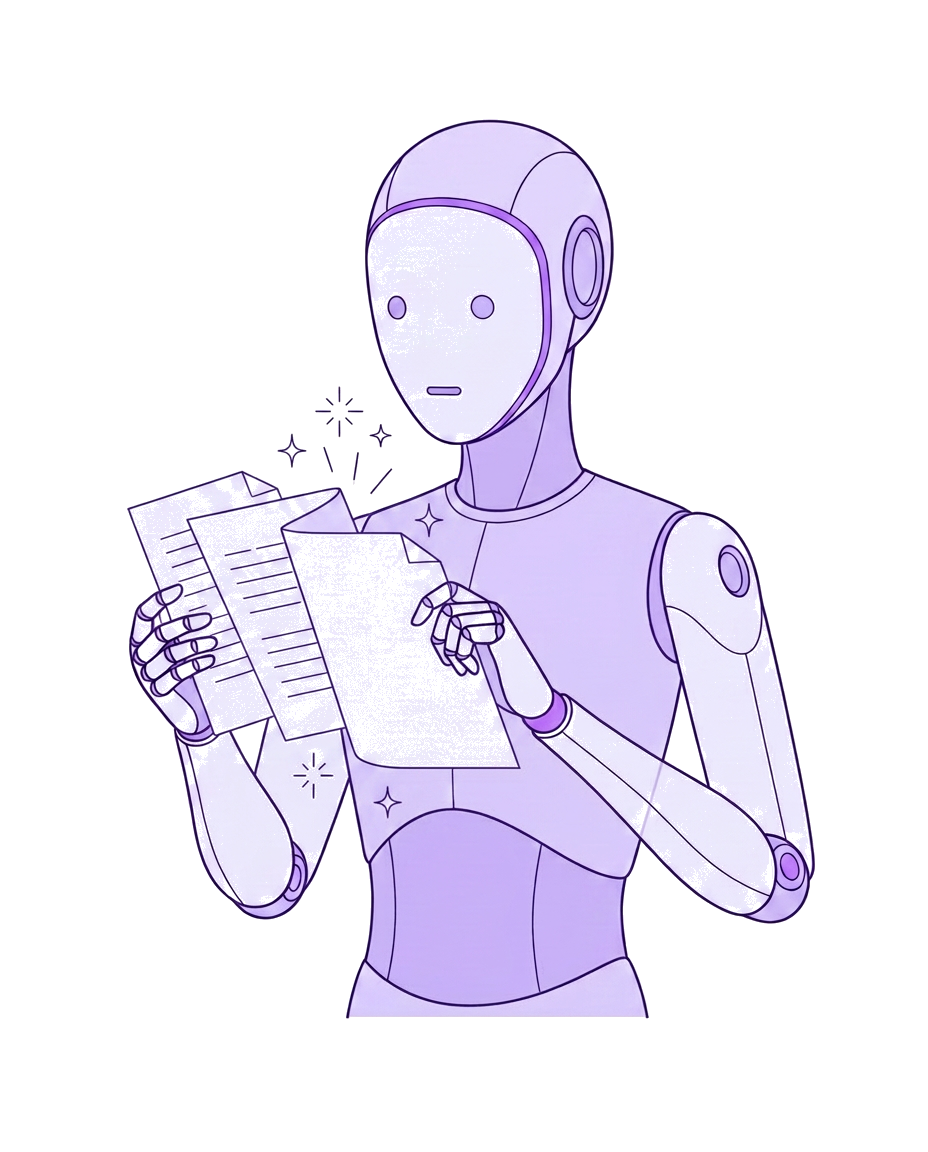
Approved workflows map and validate data from your systems. Agents trace exceptions to source so your team can review the evidence and approve the fix.

What is Fontana?

Agents with Institutional Knowledge

KnowledgeGraphAgentHarnessWorkspace

Fontana is an Agent Harness, Knowledge Graph, and Workspace - integrated as a governed AI platform for organisations with strict compliance, audit, and operational control requirements.

Knowledge Graph

The rulebooks every agent follows

The Knowledge Graph is the foundation of Fontana's agents. It grounds each agent decision in your firm's established policies, procedures, standards, and prior decisions. Each action is evidenced by auditable provenance: a citation to the file, the section, and the passage.

It allows you to:

Investigate faster

Find the relevant policy and see how similar cases were resolved.

Protect sensitive information

Agents can only retrieve information they have permission to access.

Verify answers at source

Trace each figure back to the document it came from.

How data is parsed and stored

Fontana can parse most document types used in financial services, from clean data files to messy MS Excel and Word documents, even scanned PDFs. Documents become multi-dimensional graph data, so an agent can explore and find what it needs by moving between those representations.

  • Data files
  • Excel
  • Word
  • Scanned PDF
  • Structural

    How folders, files, and file contents are organised, including the folder structure, page index, headings, and subheadings inside each document.

  • Semantic

    What the documents say about the world: the entities and the typed relationships between them. People, organisations, rules, products, and the links that join them.

  • Ontology

    The schema that governs that world. Every entity rolls up to the type it belongs to, under a policy you set: strict, logged, or free to evolve as the corpus grows.

  • Vector

    How passages are related by similarity. Embeddings show which documents read alike, so related material surfaces as a set.

  • Provenance

    Where each fact came from. Every entity traces back to the exact section that evidences it, with a citation an agent can open.

How data is retrieved

The knowledge graph gives an agent a structured way to navigate, query, and request computations on the data.

  • Hybrid search

    One call fuses full-text search, vector similarity, and graph expansion, then re-ranks the hits into a single result. Co-occurrence joins that fusion when the question depends on entities that appear together.

  • OpenCypher

    Queries traverse the graph and return a fully auditable, immutable result, so the evidence and citations can be recorded in each conversation.

  • SQL

    SELECT statements let the agent run computations, filters, and aggregations at query time, recorded as immutable proof behind each answer.

  • Python and JavaScript

    The agent can run sandboxed code against the knowledge graph to perform complex computations. Every call is recorded as immutable evidence.

  • Entity search

    Ontology entities can be found by name or by similarity, so the agent can jump between documents and follow connected data.

  • Structural search

    Navigate a file's outline, and move between sections, neighbouring passages, and similar files.
Agent Harness

Specialists for the work the firm repeats

Agents are digital employees who help you perform day-to-day operations on your data. They have their own email address, computer, and browser, and they can co-work with you, your team, and other agents on workflows and documents.

Agents allow you to:

Reduce manual work

Agents map incoming data, investigate discrepancies and draft fixes.

Speed up reviews

Each proposed fix comes with the evidence your team needs to assess it.

Focus on the decisions that need you

Agents prepare the options. You decide what changes.

Agent Capabilities

Turn these on per agent. Each one stays inside the permissions you set.

  • Email

    Each agent has its own address. It sends and receives only the email you have approved.

  • Messaging

    Talk with an agent in Slack and Microsoft Teams, with the same approvals as in Fontana.

  • Computer use

    An agent works on data in its own sandboxed terminal. The session stays isolated, and it ends when the work is done.

  • Workflow building

    An agent works with you to build a workflow. Your team then runs that process again.

  • Exceptions

    An agent acts on exception tickets: it reads the evidence, updates the ticket, and records what it did.

  • Delegation

    An agent can hand a thread to another agent, or call a subagent to help with part of the task.

  • Agent Interop

    Your agent exchanges tasks with an external agent over industry standards like A2A, ACP, ANP, and OFP.

  • Human in the Loop

    Create gated action for the agents that allow them to ask for approvals, clarifications or more information before an action is performed.

  • Browser use

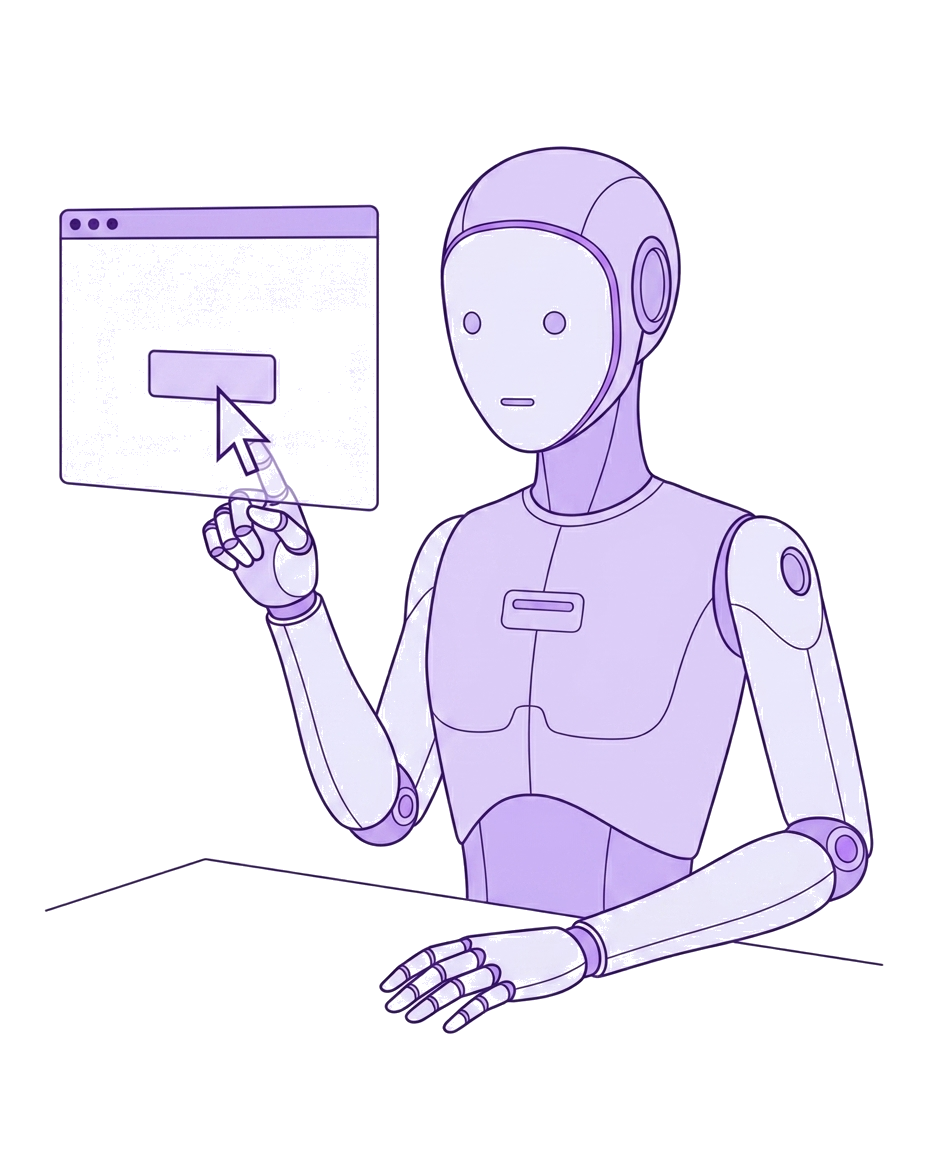
    An agent opens live pages in its own browser session, then releases that session when the work is done.

  • File system

    An agent reads and writes files in the namespaces you grant - allowing them to analyse and generate documents like reports, analysis documents and more.

  • MCP

    Connect a Model Context Protocol server your firm already runs. An agent calls only the tools you allow.

  • Dashboard building

    An agent builds a dashboard page with you from data a workflow has published. Your team opens that page in Fontana.

Any Gateway, any Model

Frontier and open models, through the gateways your firm already approves. BYOK (Bring your own key) access to your own inference providers without your data ever leaving your network.

20+ Gateways

600+ Models

See examples→

Workspace

One place to shape the work, then run it again

Bring your data, files and team into one place. Explore ideas with AI agents and turn what works into a workflow your team can use again. Exceptions, conflicting values and missing information sit in one queue: what's due, what's late, what's open and who owns it.

It allows you to:

Explore your data

Compare figures across sources and ask an agent to investigate what doesn’t match.

Define the process once

New data follows the rules your team approved, freeing you to focus on exceptions instead of repeating the analysis.

Analyse together

Work from shared evidence, trace figures to source and see how colleagues reached their conclusions.

Workspace Capabilities:

  • Data ingress

    Import data from 580+ sources. Connectors include REST, GraphQL, and SQL endpoints, with OAuth when a source requires a sign-in.

  • Formats and protocols

    Work with tabular files such as CSV and Excel, structured messages such as JSON, XML, FIX, and SWIFT, and unstructured text and PDFs.

  • Data transformation

    Filter, calculate, and reshape rows with formulas, queries, and scripts before the data moves on.

  • Lookups and enrichment

    Join a reference table onto the rows you have, so each record picks up the extra fields it needs.

  • Exception management

    Validate your data and raise an exception for a person or an agent to take up.

  • Scheduled runs

    Start a run at a set time, or when upstream data changes.

  • Agentic workflows

    Ask an agent to oversee, validate, or improve a workflow. Each run stays deterministic.

  • Audit trail

    Each run keeps a record of what executed and what changed, so you can review it later.

  • Data lineage

    Trace a figure back to the source and to each step that produced it.

  • Data egress

    Save transformed data to a file, or send it on by REST, GraphQL, email, or a connector such as SFTP.

Any source, any format, any destination

Your workflow reads files, email, APIs, and 580+ connectors, in the formats those sources already use. It sends the result to a file, an API, or a destination connector.

580+ Sources

580+ Destinations

Product walkthrough

See Fontana in action.

Works with your current set up

Your architecture. One control layer. One knowledge graph. One audit trail. Any agent. Any model.

Your choice of model

Bring your own key, held in your vault. Or use no AI at all: approved processes keep running.

600+

Models

Your key. Your vault.

Connect your sources

Bring in files, email and APIs. Every connector works within the same control model.

580+

connectors

One control model across sources.

Keep your platforms

Fontana works alongside your administrator, custodian, accounting platform and IBOR.

100+

Agents and Skills

To enrich your current operations with agentic workforce

See Fontana work on your data.

Bring a process and a sample of your data. We will run it live.